






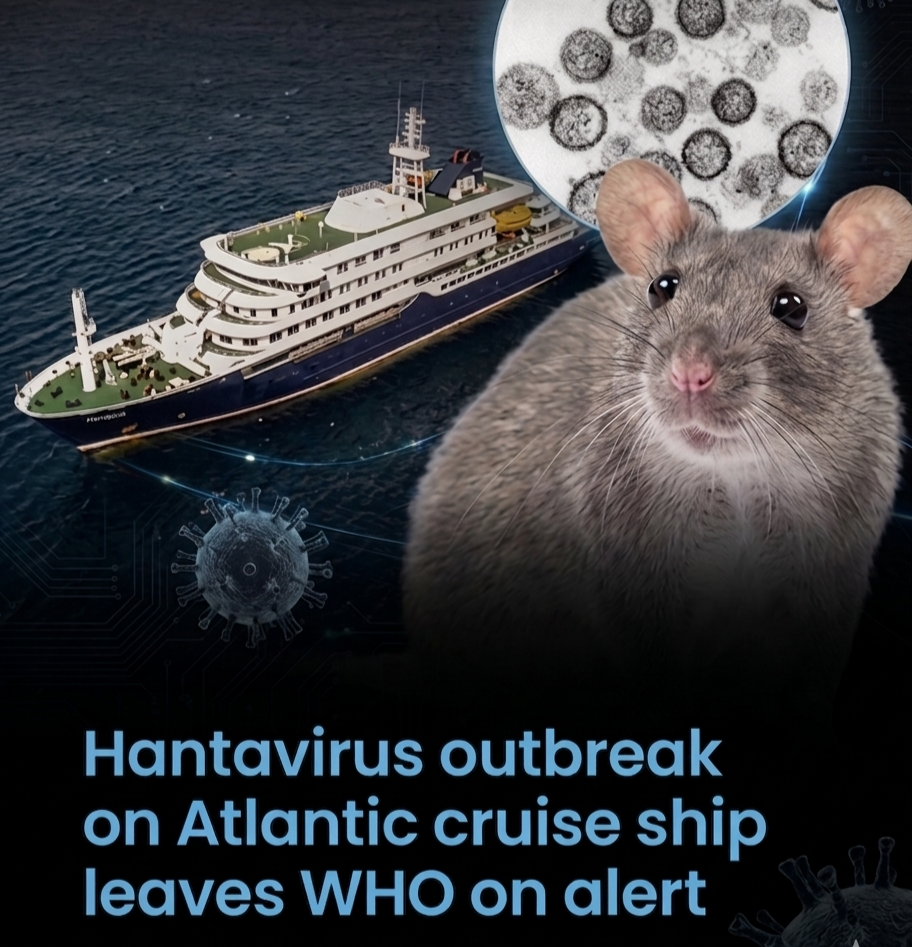
A fast-spreading hantavirus outbreak linked to an international cruise ship has triggered a global health alert after the World Health Organization (WHO) confirmed infections across 32 countries, territories, and areas, with at least three deaths recorded so far.
The outbreak has been traced to the Netherlands-flagged cruise vessel M/V Hondius, where 13 confirmed and probable cases have been identified among passengers and crew members. Health authorities say hundreds of others are now under active monitoring as investigations continue.
According to WHO, more than 600 contacts connected to the voyage have been identified globally, with over half classified as high-risk due to close exposure onboard the ship.
The first cluster of cases was reported on May 2 after passengers began showing severe respiratory symptoms, including fatalities and a critically ill patient. Since WHO’s last update on May 13, additional confirmed cases have emerged in Canada, Spain, and the Netherlands through ongoing surveillance and contact tracing.
“This outbreak is being managed through a coordinated international response,” WHO said in its latest Disease Outbreak News update.
Preliminary findings suggest that while the initial infection may have been contracted on land before boarding, subsequent transmission likely occurred onboard the vessel.
WHO noted that genetic sequencing of samples from confirmed cases showed “near-identical” viral strains, strengthening evidence of human-to-human transmission in a confined setting.
The cruise ship reportedly made stops at Saint Helena, Ascension Island, Cabo Verde, and Tenerife before the outbreak was fully identified, raising concerns about wider international exposure during the voyage.
Health officials across multiple countries are now conducting large-scale contact tracing, while exposed individuals are undergoing quarantine or active monitoring depending on risk levels.
Although WHO classified the overall global risk as low, it described the risk level onboard the ship as moderate due to overcrowded conditions and prolonged close contact among passengers and crew.
The agency explained that hantavirus transmission typically occurs through contact with infected rodents or contaminated surfaces, but noted that limited human-to-human transmission has been documented in rare cases under close-contact conditions.
There is currently no specific antiviral treatment for hantavirus pulmonary syndrome, the severe respiratory condition associated with the infection. Severe cases may require intensive care, mechanical ventilation, or ECMO support.
WHO has recommended a 42-day monitoring period for high-risk contacts and advised low-risk individuals to self-monitor for symptoms and seek immediate medical attention if they develop illness.
The global health body also confirmed ongoing coordination through international health channels as countries intensify surveillance and containment efforts.
WHO stressed that no restrictions on international travel or trade have been recommended beyond targeted monitoring of exposed individuals.
Investigations into the exact mode of transmission remain ongoing as scientists examine possible routes, including surface contamination, respiratory exposure, and confined-air circulation within the ship environment.