





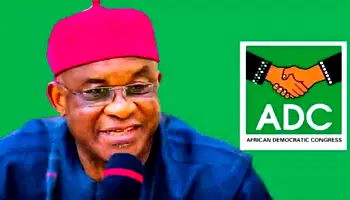
The legal battle over the leadership of the African Democratic Congress (ADC) has continued to cast uncertainty over the opposition coalition seeking to challenge the ruling All Progressives Congress (APC) in the 2027 general elections. With the dispute now heading to the Supreme Court, the prolonged litigation and internal divisions risk weakening the coalition’s electoral preparations while diverting attention from the deepening economic and social crises confronting millions of Nigerians.
The crisis centres on competing claims over the party’s leadership and the legality of congresses organised under the David Mark-led leadership. While the Court of Appeal upheld an earlier ruling restraining the Independent National Electoral Commission (INEC) from recognising certain congresses conducted by the party’s national leadership, the Mark faction has appealed to the Supreme Court, insisting that its leadership remains legitimate and that the dispute is yet to be finally determined.
Beyond the courtroom, the crisis exposes the fragility of an opposition coalition built largely around electoral arithmetic rather than a coherent programme capable of addressing unemployment, inflation, rising poverty, insecurity, deteriorating public education and healthcare, and the broader cost-of-living crisis. Public debate has become dominated by leadership tussles, legal disputes and struggles over party structures instead of concrete proposals for improving the lives of working people.
The unfolding dispute also reflects the broader limitations of Nigeria’s mainstream political establishment. While rival political blocs compete for power ahead of 2027, they have largely converged around economic policies that have accelerated privatisation, commercialisation, austerity measures and market-driven reforms, with ordinary Nigerians continuing to bear the burden through rising living costs, unemployment and declining access to essential public services.
As the legal battle continues, the uncertainty surrounding the ADC highlights the wider crisis of opposition politics in Nigeria. Genuine political change cannot be reduced to alliances among influential politicians or the outcome of court proceedings. What remains decisive is the emergence of a credible political programme that places the interests of workers, youth, farmers and poor communities at its centre, prioritising quality public education and healthcare, decent jobs, living wages, democratic accountability and the use of public resources to meet social needs rather than elite interests.