



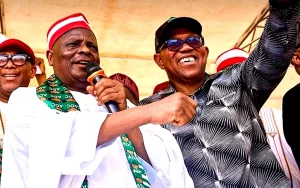
Former presidential candidate Peter Obi has said Nigeria’s deepening education crisis cannot be solved through policy changes alone, insisting that the country needs committed leadership, sustained investment, and improved learning infrastructure to rescue the sector from further decline.
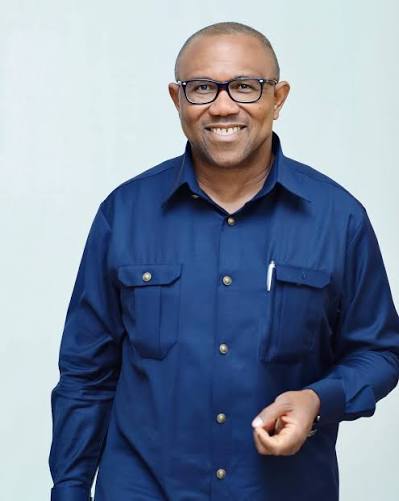
Obi made the remarks following the Federal Government’s recent admission that the policy separating junior and senior secondary schools had failed to improve educational outcomes. He argued that the poor performance recorded in recent national examinations reflects a much deeper problem rooted in inadequate funding and weak implementation rather than the policy itself.
Citing recent examination results, Obi noted that only 38.32% of candidates passed both English Language and Mathematics in the 2024 WASSCE, while only 32% achieved the benchmark pass in the 2025 computer-based WASSCE. He described the figures as evidence of a worsening crisis requiring urgent intervention.
The former Anambra State governor criticised what he described as poor budgetary allocation to education, noting that the 2026 federal budget earmarked ₦3.52 trillion for the sector—about 6.17% of total expenditure—which he said falls significantly below UNESCO’s recommended 15–20% benchmark. He argued that meaningful national development cannot be achieved without prioritising education, healthcare, and job creation.
Obi also lamented reports that Nigeria was unable to sponsor students to international STEM and Mathematics Olympiads because of inadequate funding, describing the situation as unfortunate while government resources continue to be spent on less critical engagements. He maintained that the country’s education challenges stem from poor leadership, weak management, and insufficient investment rather than the structure of the school system.
Drawing from his experience as Governor of Anambra State, Obi said strategic investments in laptops, internet connectivity, electricity, and other learning facilities significantly improved educational outcomes, urging governments at all levels to make similar long-term investments in human capital development.