





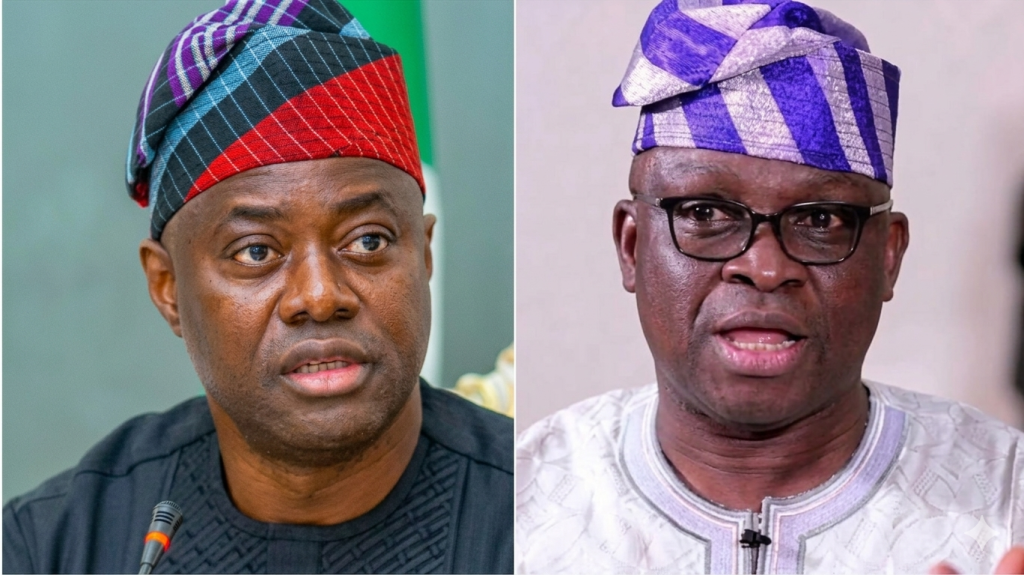
Former Ekiti State Governor, Ayodele Fayose has stirred controversy after suggesting that the recent abduction of teachers and pupils in Oyo State may have been orchestrated to embarrass and politically blackmail President .
Fayose made the claim during a televised interview while reacting to the kidnapping of teachers and schoolchildren in Oriire Local Government Area of Oyo State, an incident that has triggered public outrage, protests, and an indefinite strike by the Nigeria Union of Teachers (NUT).
The former governor argued that state governments share responsibility for security within their territories and should not be quick to shift blame to the Federal Government whenever security breaches occur. He questioned the handling of the crisis by the administration of Oyo State Governor , particularly in light of ongoing political activities in the state.
According to Fayose, he found it troubling that political engagements continued while abducted teachers and pupils remained in captivity. Although he acknowledged that he could be mistaken, he suggested that the circumstances surrounding the incident warranted closer scrutiny.
“I strongly believe, though I might be wrong, that this sometimes might be orchestrated,” Fayose said, adding that he suspected the incident was being used to portray the Tinubu administration negatively.
He further maintained that state governments receive security votes and operate local security structures that should be effectively deployed in tackling insecurity and protecting residents.
The comments come amid mounting concern over the fate of the abducted teachers and pupils, whose continued captivity has heightened fears among parents, educators, and communities across Oyo State. The crisis has also intensified calls for stronger action from security agencies and government authorities.
As of the time of filing this report, neither Governor Makinde nor the Oyo State Government had issued an official response to Fayose’s allegations.
The remarks have since generated widespread debate, with political observers, supporters, and critics expressing divergent views on the causes of insecurity and the responsibilities of different levels of government in addressing the crisis.