






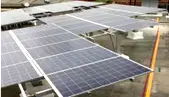
The Rural Electrification Agency (REA) has announced plans to develop 3.7 gigawatts (GW) of local solar manufacturing capacity as part of efforts to expand electricity access, reduce dependence on imported solar equipment and strengthen Nigeria’s renewable energy industry. The initiative forms part of the Federal Government’s broader strategy to tackle the country’s long-standing electricity deficit through increased investment in clean energy.
Speaking on the initiative, REA Managing Director, Dr Abba Aliyu, said agreements reached with seven companies during the 2025 Nigeria Renewable Energy Innovation Forum are expected to establish solar manufacturing facilities across Kano, Abuja, Ogun, Bayelsa and Akwa Ibom states, alongside a solar panel recycling plant in Lagos. The projects are expected to deliver a combined manufacturing capacity of 3.7GW by 2027.
According to Aliyu, the agency aims to reduce Nigeria’s dependence on imported photovoltaic (PV) panels by encouraging foreign manufacturers, particularly Chinese companies, to establish production facilities within the country. He noted that locally manufactured solar panels are already being exported from Lagos to neighbouring Ghana, demonstrating the growing potential of Nigeria’s renewable energy manufacturing sector.
The REA said expanding domestic manufacturing would not only improve electricity access for millions of Nigerians but also create jobs, promote technology transfer and strengthen local value chains in the renewable energy sector. The agency believes increased local production will lower costs, improve the availability of solar equipment and accelerate the deployment of mini-grids and off-grid electricity systems across underserved communities.
Despite the optimism surrounding the initiative, energy analysts caution that expanding solar manufacturing alone will not resolve Nigeria’s electricity crisis. They argue that the country also requires major investment in transmission infrastructure, distribution networks, energy storage and policy consistency to ensure that increased power generation translates into reliable electricity for households, businesses and industries.
If successfully implemented, the REA’s programme could position Nigeria as a regional hub for renewable energy manufacturing while contributing to improved energy security, industrial development and economic diversification.