







The successful rescue of the sister and twin sons of former Minister of Power, Adebayo Adelabu, by security operatives in Oyo State has been widely celebrated. Any rescue operation that returns victims safely to their families is undoubtedly welcome. No parent should endure the agony of having a child in the hands of kidnappers.
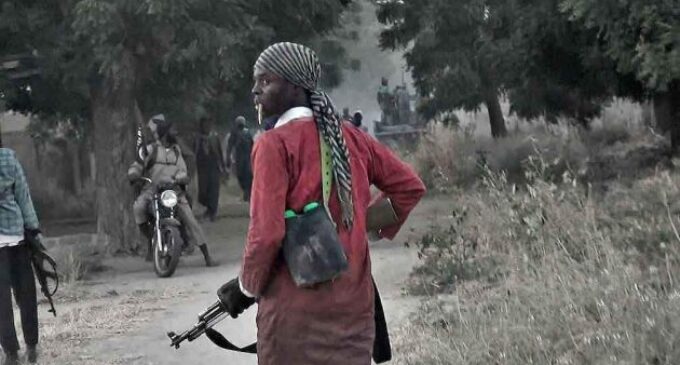
However, beyond the celebrations lies a painful question that millions of ordinary Nigerians cannot ignore: if the children and relatives of powerful politicians can be rescued within days through coordinated security operations, who will rescue the children of poor farmers, workers, traders and unemployed youths who disappear into the forests and never return?
Across Nigeria, thousands of ordinary citizens remain trapped in kidnappers’ dens. Many families sell their farms, houses, vehicles and personal belongings to raise ransom payments. Others are forced into debt. Many never hear from their loved ones again. Their names rarely make national headlines. Their faces are not splashed across television screens. Their suffering is often reduced to mere statistics.
The contrast is impossible to ignore. Whenever prominent politicians, senior government officials, wealthy businesspeople or their relatives are abducted, the full machinery of the state is swiftly activated. Tactical teams are deployed. Intelligence units are mobilised. Helicopters and specialised resources are sometimes brought into action. Press statements are issued. Senior officers personally supervise operations.
But when poor villagers are kidnapped in remote communities, the response is often painfully slow or completely absent. Families are left to negotiate with criminals on their own. Communities organise local vigilantes because they have little confidence that help will arrive from the state.
This reality exposes a deeper crisis within Nigeria’s security architecture. Security should not be a privilege reserved for the wealthy and politically connected. The life of a farmer in Oriire, a student in Zamfara, a trader in Kaduna or a labourer in Benue is worth no less than the life of a politician’s child.
The recent wave of school abductions further highlights this contradiction. Hundreds of children from poor and working-class backgrounds have been kidnapped in different parts of the country over the years. While some were eventually rescued, many families spent months or years living with uncertainty, trauma and unbearable financial burdens. Some victims remain unaccounted for.
The question therefore is not whether the rescue of Adelabu’s relatives was justified. It absolutely was. The real question is why the same urgency, commitment and resources are not deployed for every Nigerian facing similar dangers.
A society that values human life equally would not operate a two-tier security system—one for the elite and another for the poor. Every kidnapped child deserves the same attention. Every grieving parent deserves the same urgency. Every citizen deserves protection regardless of social status, political influence or economic power.
Until Nigeria develops a security system that protects the poor with the same determination used to protect the rich and powerful, many citizens will continue to view official claims of security progress with scepticism.
The rescue of Adelabu’s relatives should therefore not only be a moment of celebration. It should also serve as a reminder of the countless ordinary Nigerians still waiting for a rescue that may never come.